Welds can make a Difference

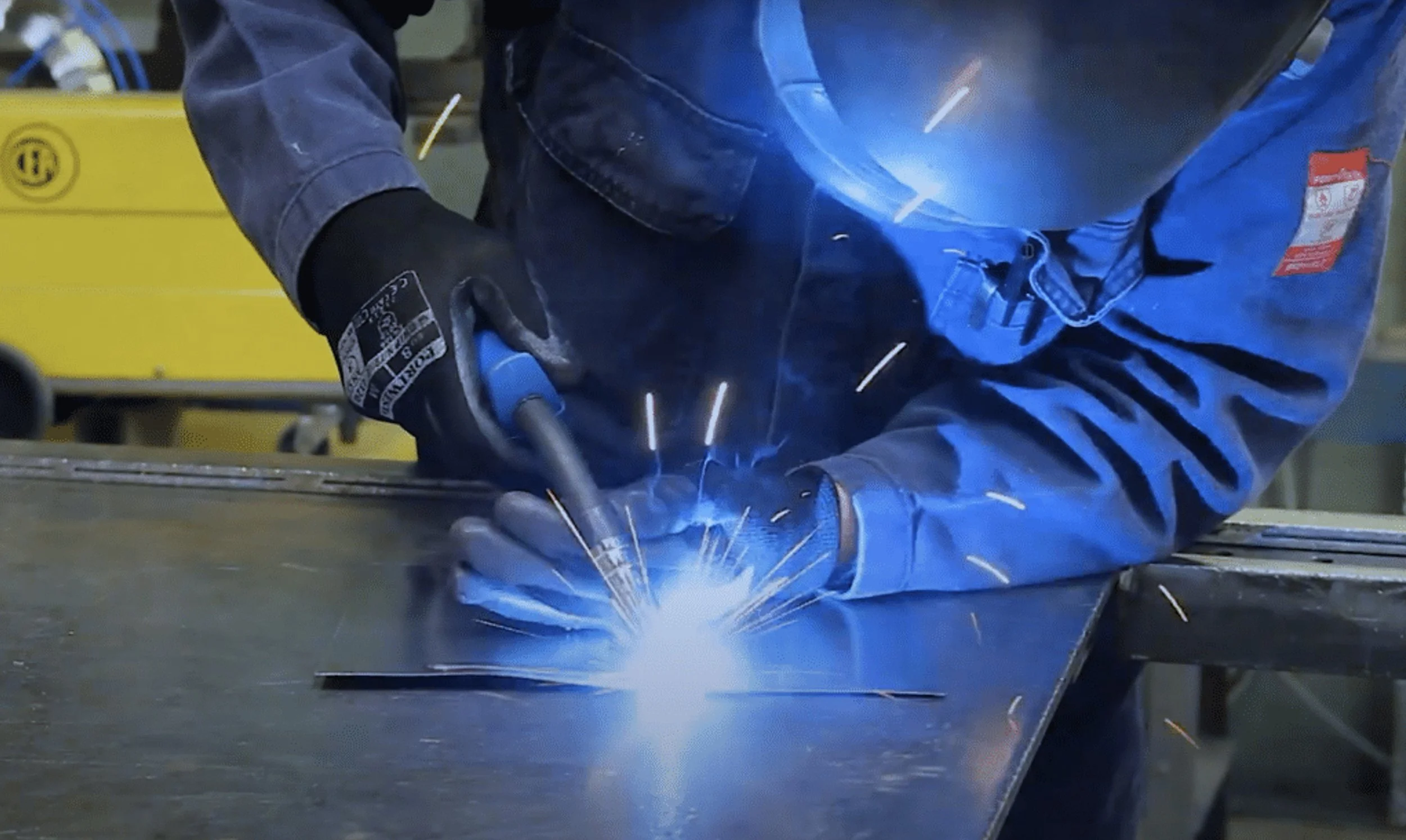
Know your welds and how they affect longevity of your powder coated product.
The Powder coated finish whilst durable is not waterproof. As such common areas of failure particularly in external environments, are typically around the welds. Picking the right weld, suitable for the environment, can make a difference.
Omega recommends Stainless Steel and Bronze/Silicon Bronze welds. They are both High Corrosion Resistance and suitable for powder coating.
If Mild Steel welds are chosen for strength, it is our recommendation that the oils and greases are removed (using thinners) and a heatproof galv spray or similar is lightly applied to the welds for added protection. A powder-coat primer can also help prolong corrosion.
A summary of the Pro’s and Con’s is outlined below.
1. Mild Steel Weld (Carbon Steel)
Description: Most common welding material, usually matched with mild steel base.
Pros:
Strong and widely available.
Easy to weld using MIG, TIG, or stick welding.
Cons for Powder Coating / Rust:
Prone to rust and oxidation, especially in uncoated areas.
Requires thorough cleaning and sandblasting before powder coating.
2. Stainless Steel Weld
Description: Welds using stainless filler rods (e.g., 308, 316) on stainless steel base.
Pros:
Corrosion resistant, much better for humid or salty environments.
Requires less maintenance than mild steel.
Cons for Powder Coating:
Surface contamination (welding oxides) must still be removed to ensure good powder adhesion.
Expensive compared to mild steel.
3. Bronze / Silicon Bronze Weld
Description: Typically used for joining copper, brass, or dissimilar metals.
Pros:
Corrosion resistant in many environments.
Smooth weld bead, aesthetically pleasing.
Cons for Powder Coating:
Different thermal conductivity and oxide formation compared to steel can make coating adhesion tricky.
Rarely used on carbon steel unless as a brazing filler.
Mostly used for decorative or marine applications where corrosion is more important than powder coating.
4. Aluminium Weld (Aluminium / Aluminium Filler)
Description: Aluminium TIG or MIG welds, sometimes with 4045 or 5356 filler rods.
Pros:
Lightweight and naturally corrosion resistant (forms oxide layer).
Can be powder coated for aesthetics or extra corrosion protection.
Cons:
Requires special surface prep (etching, sandblasting, or chemical treatment) for powder coating adhesion.
More difficult to weld than steel.
5. Cast Iron / Hard-to-Weld Metals
Description: Uses nickel-based or specialty rods for joining cast iron or high-carbon steels.
Pros:
Strong if welded correctly.
Cons for Powder Coating / Rust:
Porosity and cracks in weld zones can trap moisture > rust under coating.
Difficult to sandblast smooth, affecting powder coating uniformity.
Best Welding Materials for Powder Coating & Rust Resistance
| Material | Powder Coating Suitability | Corrosion Resistance | Notes |
|---|---|---|---|
| Mild Steel | Good with proper prep | Low | Needs sandblasting & primer |
| Stainless Steel | Excellent | High | Clean HAZ for adhesion |
| Bronze / Silicon Bronze | Moderate | High | Rarely used on steel |
| Aluminum | Moderate | Moderate-High | Needs etch or special primer |
| Cast Iron | Poor | Low | Pre-treatment & primer required |
Key Takeaways
Mild steel is the most common, but LOW Corrosion resistance. Recommend prime and/or Heat Proof Galv Spray. Ensure oils are removed prior to spraying a galv spray and consider adherence issues.
Stainless steel is ideal for corrosion resistance but still needs surface cleaning for powder adhesion.
For decorative or marine applications, bronze or aluminium welds work well but need specialized prep.
Avoid welding materials prone to cracks or porosity if powder coating will be the primary corrosion protection.