Venting and Draining Guide for Aluminium

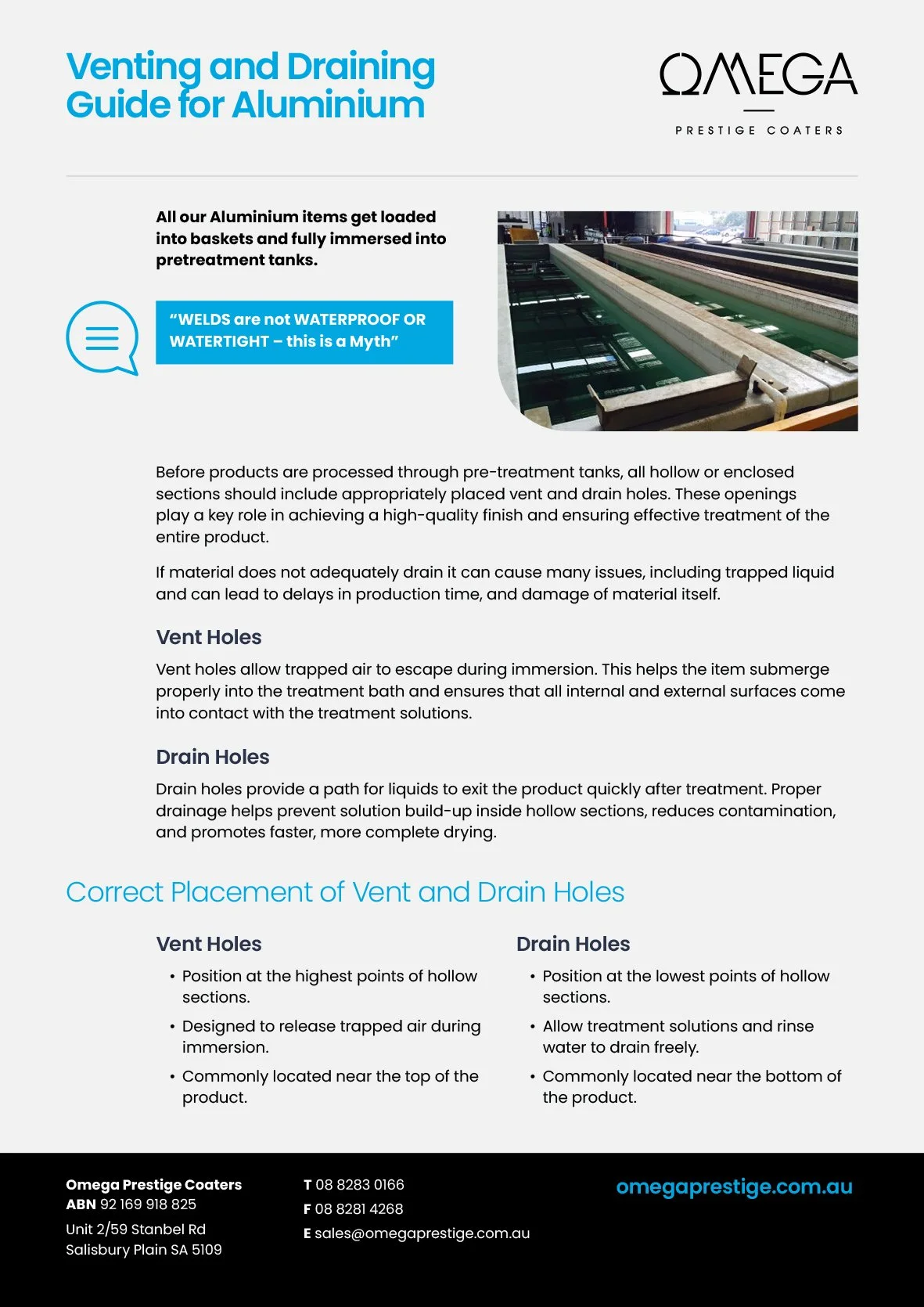
All our Aluminium items get loaded into baskets and fully immersed into pretreatment tanks.
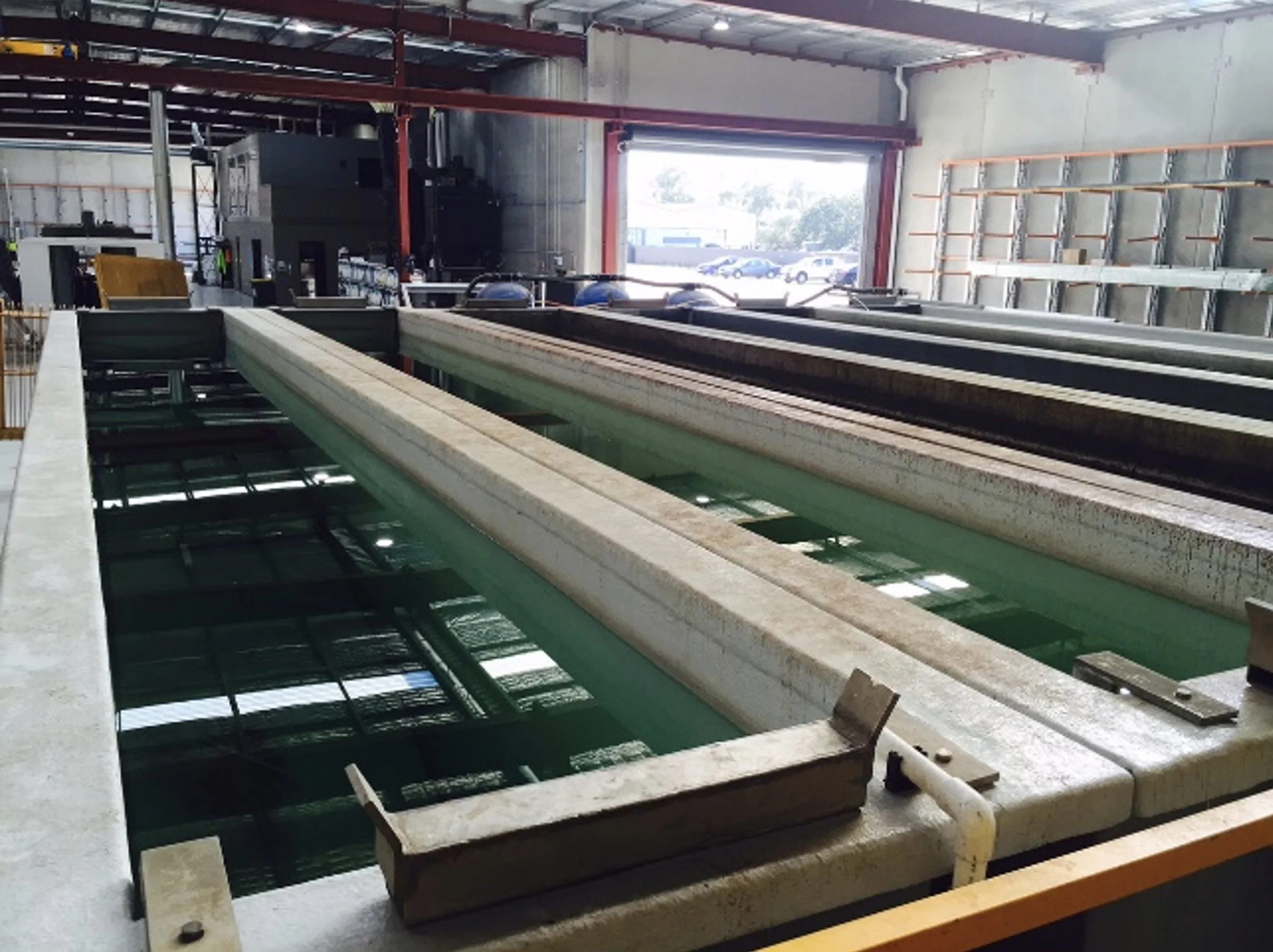
“WELDS are not WATERPROOF OR WATERTIGHT – this is a Myth”
Before products are processed through pre-treatment tanks, all hollow or enclosed sections should include appropriately placed vent and drain holes. These openings play a key role in achieving a high-quality finish and ensuring effective treatment of the entire product.
If material does not adequately drain it can cause many issues, including trapped liquid and can lead to delays in production time, and damage of material itself.
Vent Holes
Vent holes allow trapped air to escape during immersion. This helps the item submerge properly into the treatment bath and ensures that all internal and external surfaces come into contact with the treatment solutions.
Drain Holes
Drain holes provide a path for liquids to exit the product quickly after treatment. Proper drainage helps prevent solution build-up inside hollow sections, reduces contamination, and promotes faster, more complete drying.
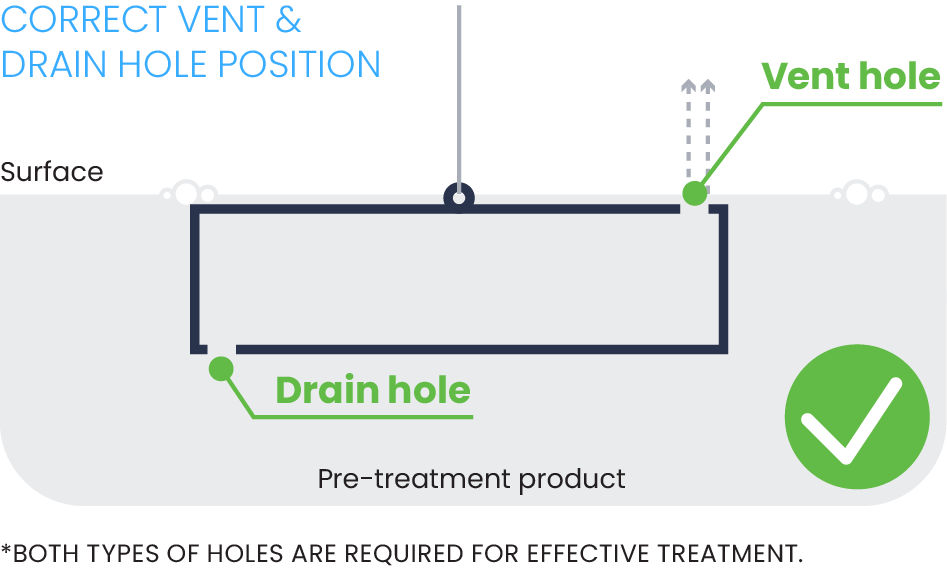
Correct Placement of Vent and Drain Holes
Vent Holes
Position at the highest points of hollow sections.
Designed to release trapped air during immersion.
Commonly located near the top of the product.
Drain Holes
Position at the lowest points of hollow sections.
Allow treatment solutions and rinse water to drain freely.
Commonly located near the bottom of the product.
Best Practice
Correct Configuration
When vent and drain holes are properly positioned, the product can be fully immersed, treatment solutions can circulate effectively, and all surfaces can be cleaned, treated, rinsed, and dried as intended.
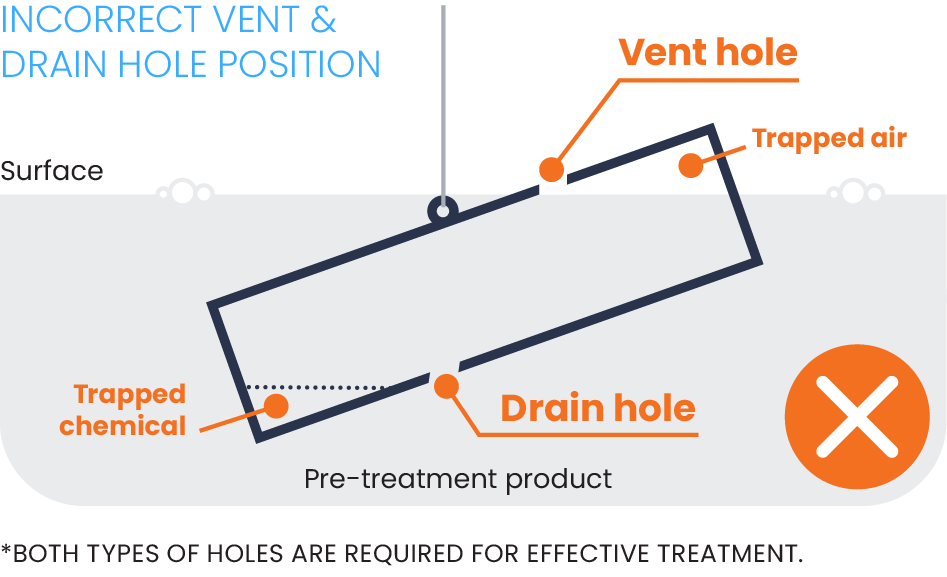
Incorrect Configuration
Without adequate venting and drainage, air may become trapped inside the product, causing it to float or preventing complete treatment. Residual chemicals and liquids can also remain trapped, potentially resulting in contamination, staining, corrosion, or coating defects.
Holes for Base Plates and Posts
It is our preference that posts are left open ended. If this is not possible two holes in a diagonal formation is ideal.



Hole Size matters
Hole size needs to increase as the internal volume of the section increases to improve venting and drainage efficiency.
Larger holes enable faster sinking, draining, and rinsing, resulting in more effective chemical pre-treatment and overall process performance.

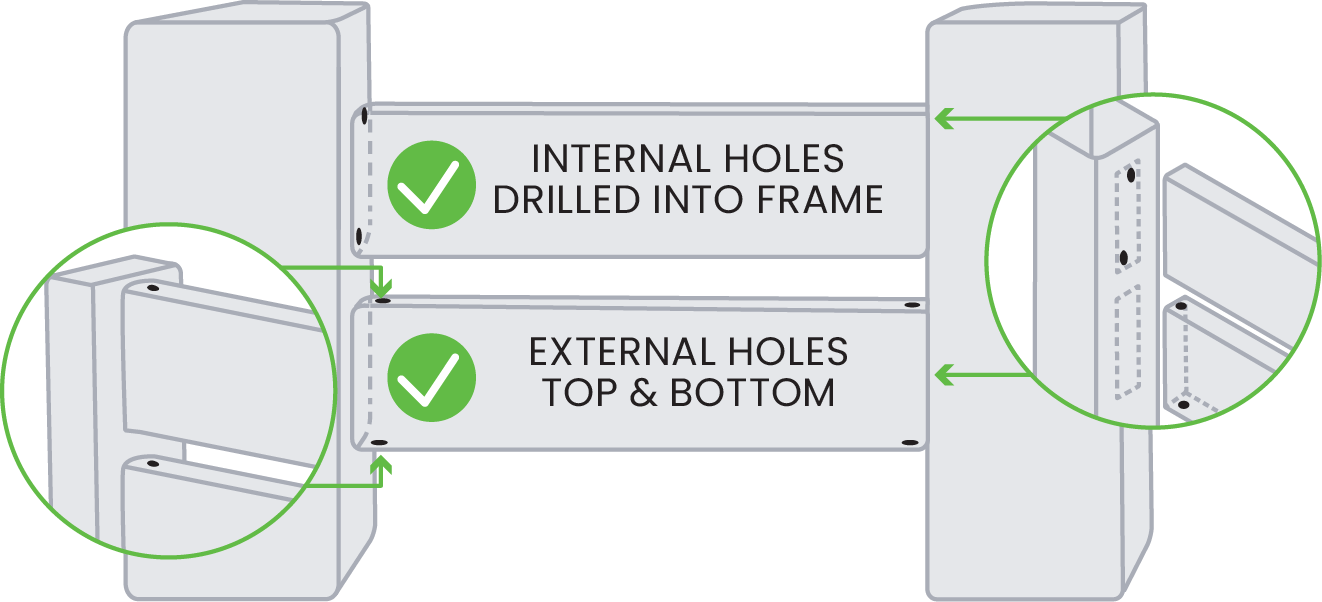
Hollow Section Frames
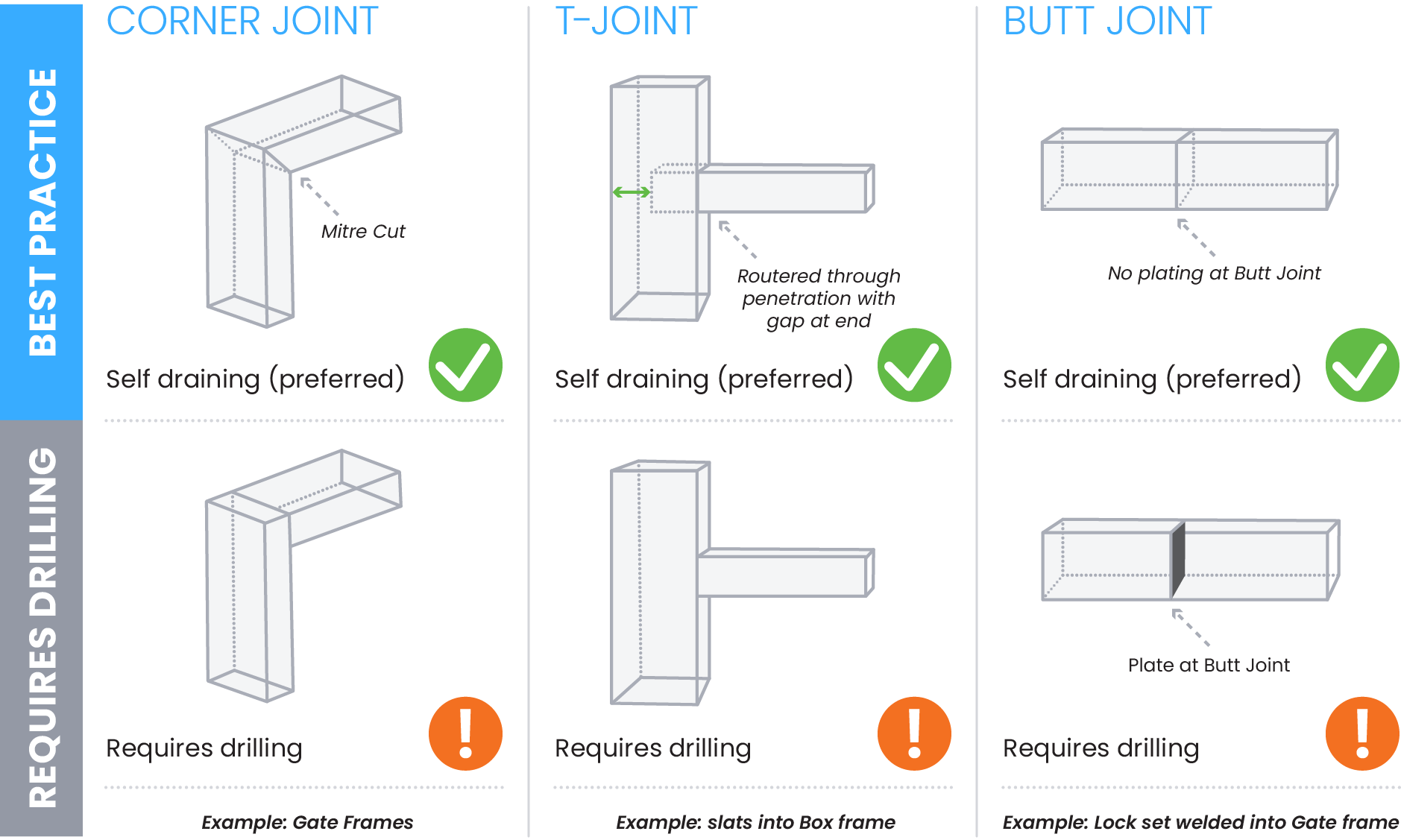
Design and manufacture of hollow section frames is very critical. Butting lengths of hollow section and welding them without any holes can lead to the hollow sections retaining fluid from the immersion into the pretreatment tanks.
Corner (Mitred) Joints and T Joints with a gap is recommended.
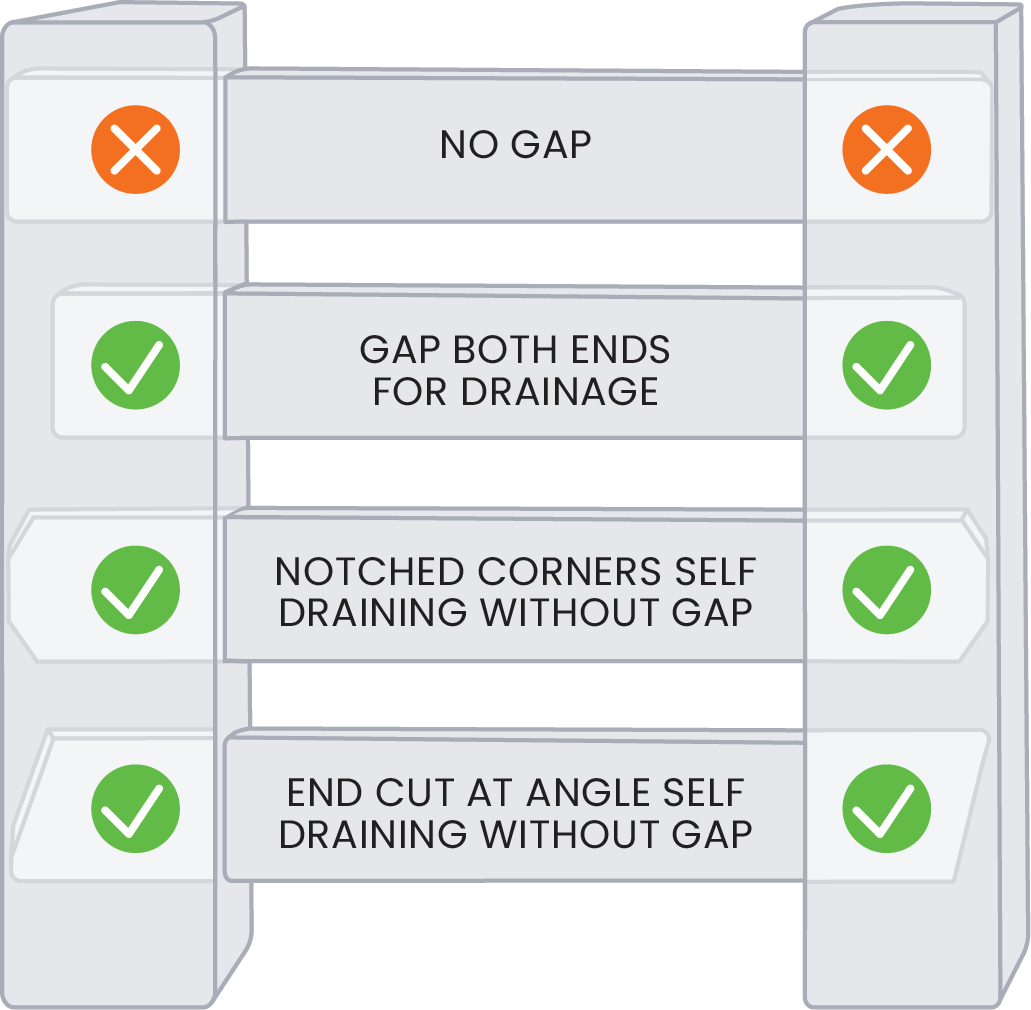
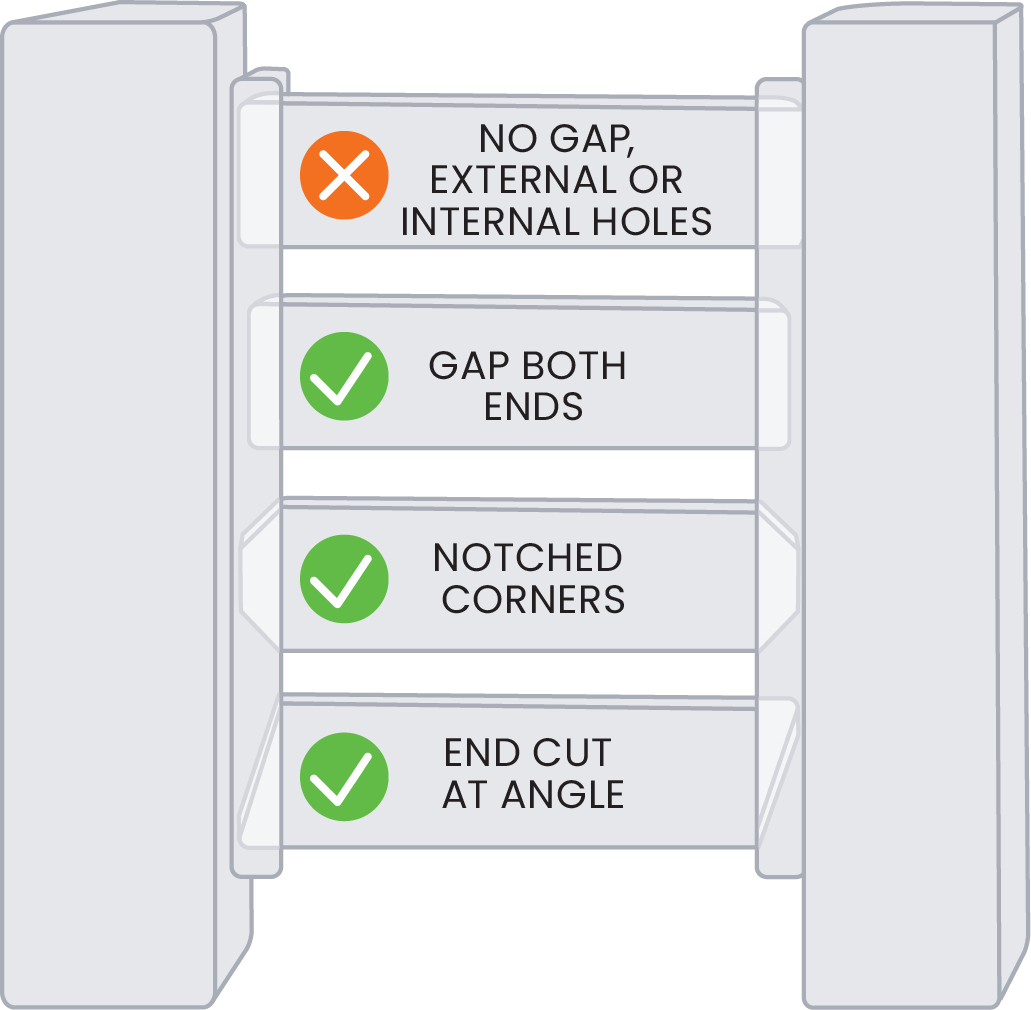
Slats and Balusters
Design and manufacture of Slats and Balusters, especially fabricated into a frame should allow for adequate drainage. To ensure this, ensure a gap is left on either side for drainage, notch the corners or angle cut with gap on either side.